Bojonegoro — Deputy Minister of Cooperatives of the Republic of Indonesia officially launched the Modern Cooperative Transformation Book in a strategic momentum that marks the strengthening of the new direction of the national cooperative movement. This launch was coupled with the introduction of the cooperative holding model initiated by BMT NU Ngasem as a form of institutional consolidation and modernization.
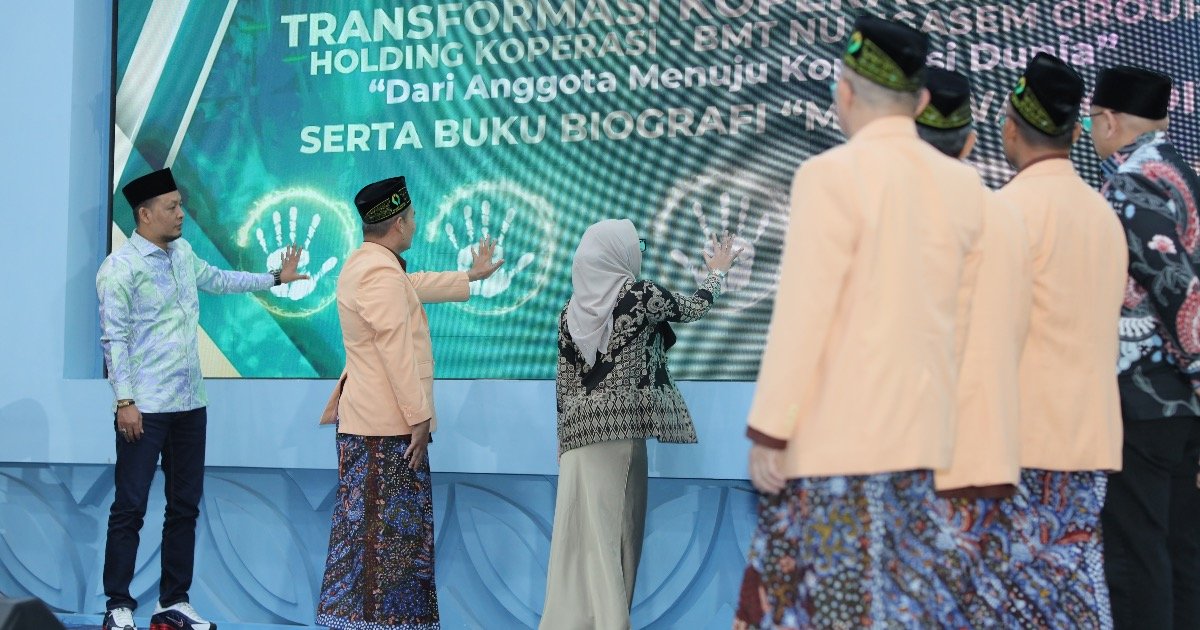
The event was attended by the Deputy Regent of Bojonegoro, Chairman of the Bojonegoro Regency DPRD, representatives of the East Java Provincial Cooperative and SME Service, Main Director of LPDB Cooperative, Presidium of Forkopi, as well as the management of BMT NU Ngasem. The launching procession was carried out symbolically through the activation of a digital screen, marking the start of a new chapter of cooperative transformation based on integration and modern governance.
In this momentum it was emphasized that cooperative transformation does not just stop at strengthening members, but must move towards business consolidation through a holding scheme. This model is considered capable of increasing operational efficiency, strengthening synergy between units, as well as expanding financing and investment capacity.
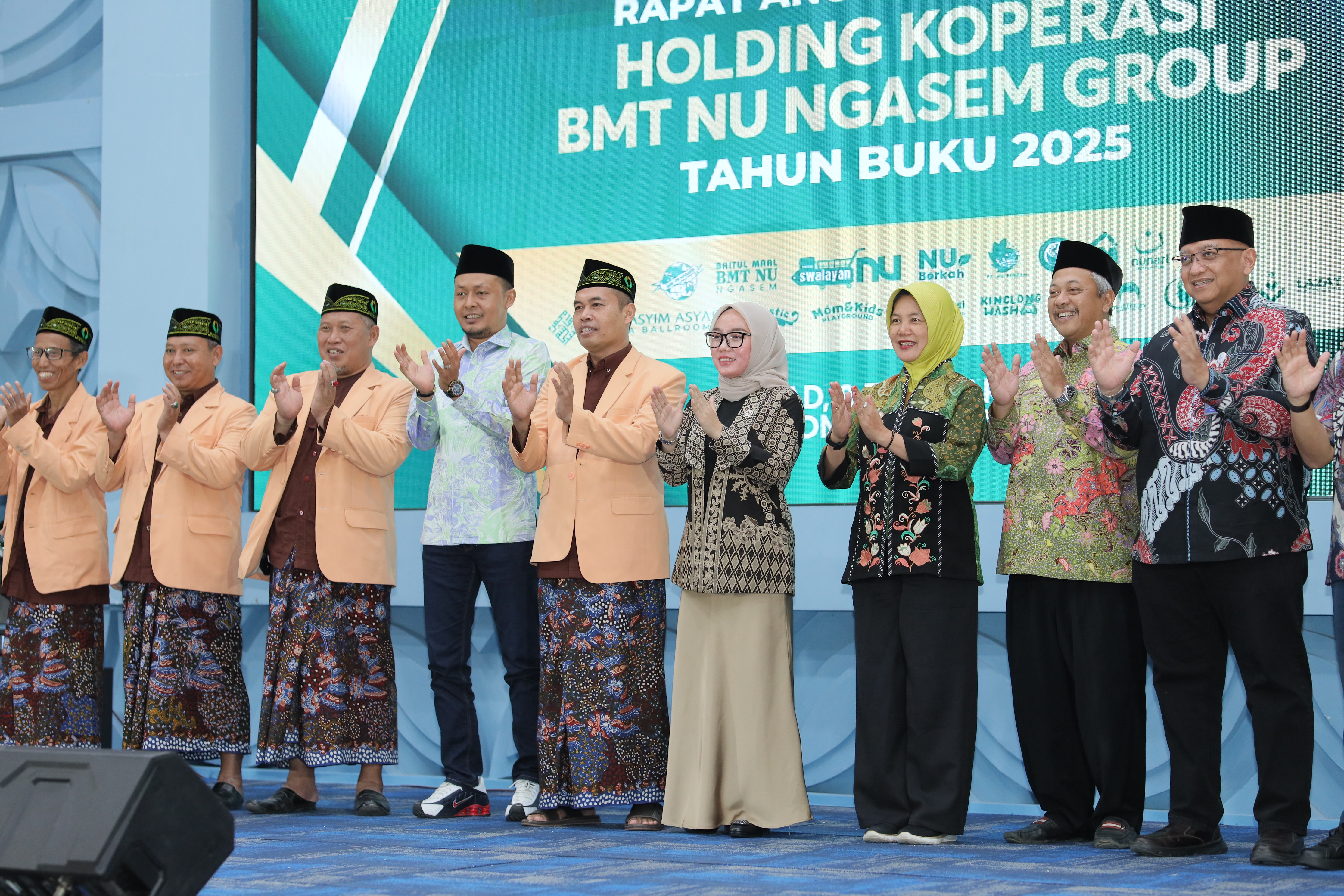
BMT NU Ngasem Group is said to be one that has begun implementing this approach. Cooperatives are consolidated into one holding structure to strengthen competitiveness and management professionalism. This approach is considered relevant to the needs of today's cooperatives which are required to be adaptive to market dynamics and regulations.
The book Modern Cooperative Transformation: From Members to World Cooperatives which was launched is a conceptual reflection as well as a strategic guide to the transformation of Indonesian cooperatives. The book contains ideas about modern governance, cooperative business integration, as well as the vision of making cooperatives a global class economic entity without abandoning the principle of mutual cooperation.
On the same occasion, the biographical book Muhammad Wahyudi: Leading, Inspiring, Empowering, which raised a narrative of leadership based on integrity, example and economic empowerment of the people, was also launched. This launch strengthens the positioning that institutional transformation requires leadership figures who have a systemic vision and long-term social commitment.
Institutionally, this step is strategic branding that cooperatives are no longer positioned as small-scale economic entities, but rather as institutions capable of building member-based corporations and even developing holding structures.
With the availability of this book nationally through the Gramedia network, it is hoped that the transformation of modern cooperatives will not stop in one region, but will become a reference and replication model for other cooperatives in Indonesia.
This momentum shows that consolidation, professional governance and measurable leadership are the main foundations towards stronger, more integrated and competitive Indonesian cooperatives at the national and global levels.

